
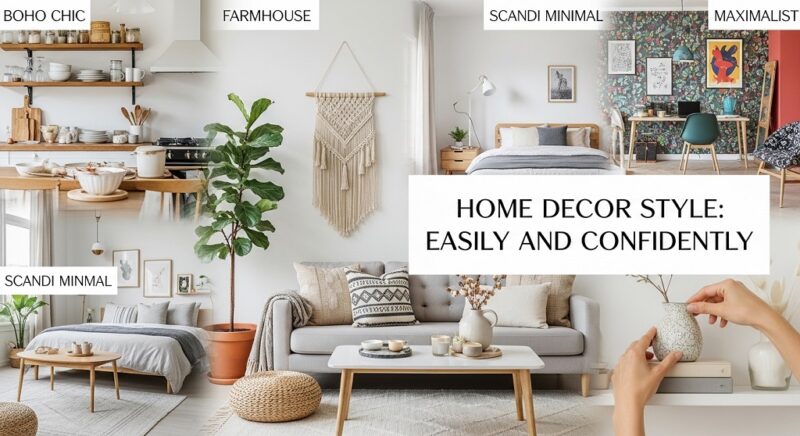
Many people struggle to decorate their homes because they don’t know what their style actually is. They copy Pinterest boards, follow trends, and buy random furniture pieces that never feel cohesive. The result is frustration, wasted money, and a space that still feels unfinished.
The good news is that finding your home decor style is not about talent. It’s about observation, elimination, and structure. Once you understand how to identify patterns in what you like, your decisions become faster and more confident.
This guide explains a practical step-by-step system professionals use to define personal interior styles without confusion or guesswork.
What Does It Mean to Find Your Home Decor Style?
Snippet Answer: Finding your home decor style means identifying consistent preferences in color, furniture shape, materials, lighting, and layout choices that reflect how you want your space to feel and function. It helps you make confident design decisions and avoid mismatched decorating mistakes.
Answer Block: Finding your decor style means recognizing patterns in the colors, materials, furniture shapes, and layouts you naturally prefer. It creates consistency across rooms, prevents unnecessary purchases, and helps you build a home environment that supports your lifestyle and daily routines.
Your decor style is not a label like “modern” or “bohemian.” It is a decision framework.
Interior designers rarely begin with furniture selection. Instead, they identify mood, structure, and lifestyle needs first. This prevents visual clutter and conflicting design directions later.
For example, someone who prefers quiet spaces usually gravitates toward neutral palettes, soft textures, and open layouts. Someone energetic often prefers layered textures, bold accents, and statement lighting.
Understanding this connection makes decorating intentional instead of random.
When your style becomes clear:
- You stop copying trends blindly
- You buy fewer unnecessary decor items
- Your rooms feel cohesive faster
- Your budget stretches further
Why Is It Hard to Identify a Personal Decor Style?
Answer Block: Most people struggle to identify their decor style because they mix trends from multiple sources, lack visual comparison systems, and purchase items before defining a design direction. Without structure, rooms become collections of objects instead of coordinated environments.
Decor confusion usually starts online.
Platforms like Pinterest and Instagram show highly styled interiors without explaining the logic behind them. As a result, homeowners collect inspiration images that belong to completely different design categories.
For example:
- Minimalist furniture with farmhouse lighting
- Industrial shelving beside luxury velvet sofas
- Scandinavian palettes mixed with bohemian rugs
Each element may look attractive individually. Together, they create visual conflict.
Another problem is trend pressure. Many people assume their homes must follow what is currently popular. However, trends change every year, while personal comfort preferences remain stable for decades.
Professional decorators solve this by identifying lifestyle needs before visual direction.
Ask yourself:
- Do I want calm or energetic rooms?
- Do I prefer symmetry or asymmetry?
- Do I like open or layered spaces?
Your answers reveal more than any trend list.
Which Questions Help You Discover Your Style Faster?
Answer Block: The fastest way to identify your decor style is by evaluating how you prefer your home to feel, how you use each room daily, and which materials and color palettes appear repeatedly in your saved inspiration images.
Instead of asking “What style do I like?”, ask structured questions that reveal patterns.
Start with emotional goals.
Decide whether your home should feel:
- Relaxed and quiet
- Warm and layered
- Bright and open
- Elegant and structured
Next, review your saved inspiration images. Look for repetition.
Check whether you consistently choose:
- Wood textures or metal finishes
- Neutral tones or strong contrast colors
- Soft curves or straight edges
- Minimal layouts or decorated surfaces
These repeating elements define your style more accurately than style names.
Interior designers often create a “pattern checklist” before selecting furniture. You can do the same using screenshots or mood boards.
Within 20 minutes, clear trends usually appear.
What Are the Most Common Home Decor Styles to Compare?
Answer Block: Comparing popular decor styles such as modern, minimalist, Scandinavian, farmhouse, industrial, and bohemian helps narrow your preferences quickly by identifying which materials, color palettes, and furniture shapes align with your comfort and lifestyle expectations.

Most homes combine two primary styles rather than following only one.
| Style | Main Materials | Color Direction | Furniture Shape |
|---|---|---|---|
| Modern | Glass, metal, smooth wood | Neutral with contrast | Clean straight lines |
| Minimalist | Light wood, matte finishes | Soft neutrals | Simple low-profile |
| Scandinavian | Natural wood, linen | White + warm accents | Functional and light |
| Farmhouse | Distressed wood, cotton | Warm neutrals | Comfort-focused |
| Industrial | Steel, brick, concrete | Dark neutrals | Bold structured |
| Bohemian | Rattan, woven textiles | Layered colors | Relaxed shapes |
Compare your saved inspiration images against this table.
You will usually recognize alignment with two categories immediately.
How Can Mood Boards Help Identify Your Decor Style?
Answer Block: Mood boards help identify decor style by organizing inspiration images into visual patterns that reveal repeated color palettes, textures, furniture silhouettes, and lighting preferences, making it easier to translate abstract ideas into a clear decorating direction.
A mood board turns scattered inspiration into measurable direction.
Start by collecting 15–20 images you genuinely like. Avoid copying influencers. Choose only what feels comfortable to you.
Then analyze similarities.
Look for repetition in:
- Wall colors
- Floor materials
- Lighting styles
- Furniture height
- Fabric textures
If 70% of images contain similar elements, you already have a style foundation.
Digital tools like Canva or Pinterest boards work well for this process. Even printed magazine cutouts can produce strong clarity.
Professional decorators rely on mood boards before selecting furniture because they prevent inconsistent purchases later.
How Do Lifestyle Needs Influence Decor Style Choices?
Answer Block: Lifestyle needs shape decor style by determining furniture durability, layout flexibility, storage requirements, and material selection, ensuring your home supports daily routines instead of forcing you to adapt to impractical design decisions.
Your decor style must support your routine.
A visually attractive space that does not function well quickly becomes stressful.
For example:
- Families need washable fabrics
- Remote workers need structured lighting
- Small apartments need hidden storage
- Pet owners need scratch-resistant surfaces
Ignoring these factors leads to expensive replacements later.
Interior designers always evaluate movement patterns first. They ask where people walk, sit, relax, and store items daily.
Once layout needs are clear, visual style becomes easier to define.
Function always supports style, not the opposite.
How Can You Combine Multiple Decor Styles Successfully?
Answer Block: Combining decor styles successfully requires choosing one dominant style for structure and a secondary style for accents, while maintaining consistent color palettes and materials to prevent visual conflict across rooms.
Most modern homes use hybrid styles.
The key is balance.
Choose one base style for:
- Wall colors
- Furniture scale
- Floor materials
Then introduce a secondary style through:
- Lighting fixtures
- Artwork
- Textiles
- Accent furniture
For example:
Scandinavian + Bohemian works well because both emphasize natural textures.
Industrial + Minimalist works well because both prioritize structure.
Farmhouse + Modern works well when contrast is controlled.
Avoid combining more than two primary styles in one room.
Consistency always improves perceived quality.
What Simple Step-by-Step Process Helps Finalize Your Decor Style?
Answer Block: Finalizing your decor style involves reviewing inspiration images, identifying repeating materials and colors, selecting one primary style direction, testing layout compatibility with daily routines, and confirming decisions using a mood board before purchasing furniture.
Follow this professional workflow:
- Collect inspiration images
- Identify repeating textures and colors
- Select one dominant style
- Add one supporting accent style
- Match choices with lifestyle needs
- Create a simple room layout plan
- Purchase only after confirmation
This process prevents expensive decorating mistakes.
It also reduces decision fatigue because every purchase follows a defined direction.
Once your system is clear, decorating becomes faster and more enjoyable.
Conclusion
Most people believe finding a home decor style requires artistic talent. In reality, it requires observation and structure. When you analyze patterns in your inspiration images, evaluate lifestyle needs, and compare materials carefully, your style becomes obvious.
The solution is simple: stop chasing trends and start identifying repetition. Mood boards reveal preferences. Style comparisons provide clarity. Functional planning ensures comfort.
Once these three elements align, decorating decisions become confident and consistent.
Start today by collecting 15 inspiration images and identifying repeated colors, materials, and furniture shapes. Within one hour, your decor direction will already feel clearer.
A defined style saves time, reduces cost, and transforms your home into a space that supports how you actually live.
Frequently Asked Questions
Can I have more than one home decor style?
Yes. Most homes combine one dominant decor style with one supporting accent style. Keeping materials and color palettes consistent ensures both styles work together without creating visual clutter.
How long does it take to identify a decor style?
Most people identify clear style patterns within one hour by reviewing inspiration images and noting repeated textures, colors, and furniture shapes.
Should I follow interior design trends?
Trends can inspire ideas, but they should not define your entire decor direction. Personal comfort and lifestyle needs always create more lasting results.
What is the easiest decor style for beginners?
Scandinavian style is often easiest because it uses neutral colors, simple furniture shapes, and natural materials that adapt well to most spaces.
Do small homes need different decor styles?
Small homes benefit from minimalist or Scandinavian approaches because they emphasize light, storage efficiency, and uncluttered layouts.
Can mood boards really help beginners?
Yes. Mood boards reveal repeated visual preferences quickly and prevent inconsistent purchasing decisions during decorating.
Is hiring an interior designer necessary?
No. Many homeowners identify their decor style successfully using structured comparison methods and inspiration analysis without professional assistance.
Read More Also: What is Pink Insulation Made of?
Learn More: What You Should Consider Before Building Your First Home
